SEBI Constitutes Working Group to Review ESG Rating Providers Framework
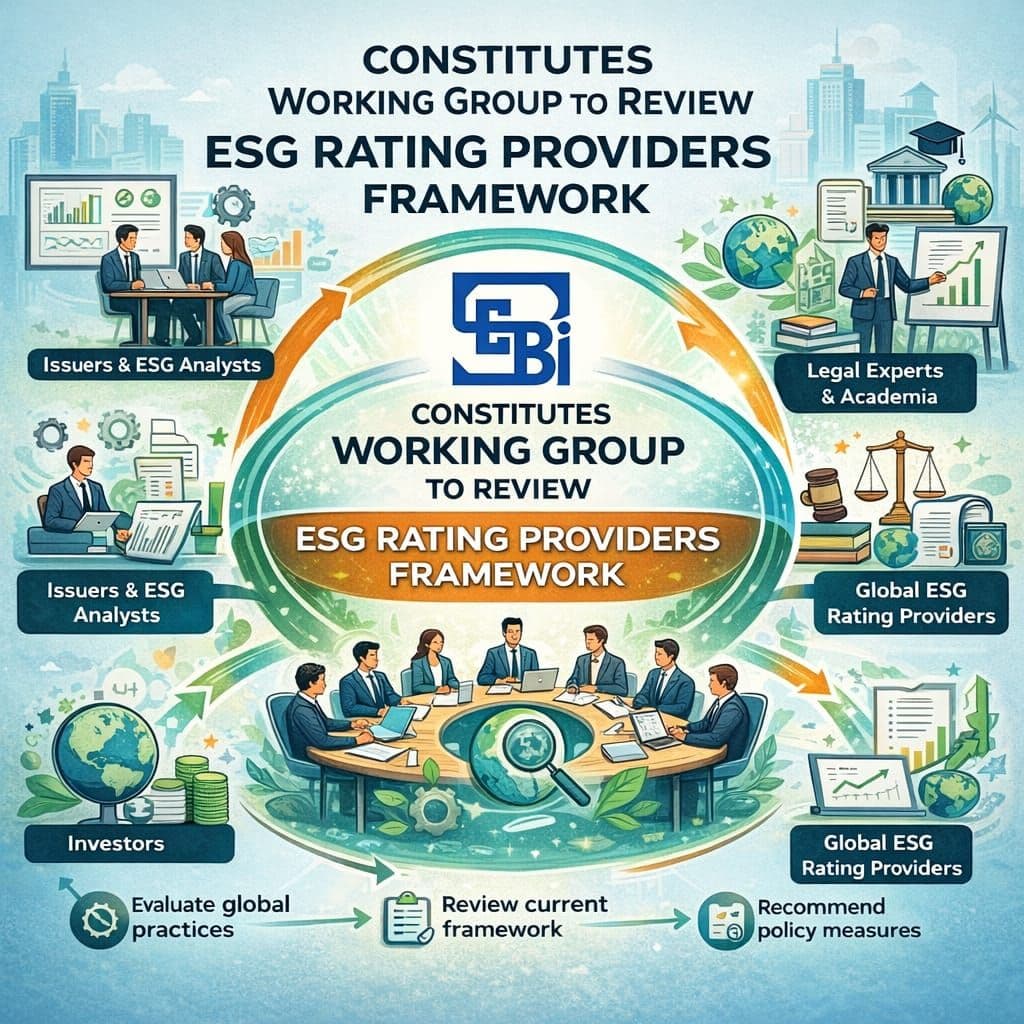
In a significant development for India’s sustainable finance ecosystem, the Securities and Exchange Board of India (SEBI) has constituted a Working Group to review the regulatory framework governing ESG Rating Providers (ERPs).
The move comes in response to stakeholder feedback and reflects the regulator’s intent to strengthen transparency, reliability, and investor confidence in ESG ratings.
The Working Group includes representatives from issuers, investors, domestic and global ESG rating providers, ESG analysts, legal experts, and academia. It has been tasked with reviewing the current framework, evaluating global regulatory developments, and recommending policy measures suited to the Indian market context.
Our Perspective: A Turning Point for ESG Credibility
From our standpoint at Ploxi, this development marks a critical inflection point in India’s ESG journey.
Over the past few years, ESG ratings have increasingly influenced capital flows, lending decisions, procurement eligibility, and investor perception. However, several structural challenges have created uncertainty for corporates, particularly industrial and commercial enterprises navigating compliance under SEBI’s BRSR regime and rising global reporting expectations.
Key concerns have included:
- Methodological inconsistencies
- Lack of standardised disclosures
- Limited comparability across rating providers
- Data transparency gaps
A strengthened ESG Rating Provider framework can significantly improve the credibility of ESG assessments in India.
It can help:
- Improve rating consistency and comparability
- Reduce greenwashing risks
- Enhance global investor confidence in Indian companies
- Create clearer ESG performance benchmarks
For industrial and commercial players, this means ESG ratings are likely to become more rigorous, more data-driven, and more aligned with international standards.
What This Means for Industrial and Commercial Clients
For energy-intensive sectors, manufacturing units, logistics operators, commercial real estate players, and infrastructure developers, regulatory tightening will likely lead to greater scrutiny of sustainability performance.
Companies may experience:
- Greater scrutiny of Scope 1 and Scope 2 emissions, and increasing focus on Scope 3 emissions
- Higher expectations around renewable energy integration
- Stronger linkages between ESG disclosures and access to capital
- Increased importance of auditable ESG data systems
Companies that treat ESG purely as a compliance requirement may face rating volatility. In contrast, businesses that embed ESG into operational strategy are more likely to gain a competitive advantage in financing, procurement opportunities, and investor positioning.
How Ploxi Supports This Transition
At Ploxi, we work with industrial and commercial clients to move beyond surface-level compliance and build structurally strong ESG foundations. Our approach is designed to prepare businesses for evolving regulatory and rating environments.
ESG Strategy and Gap Assessment
- BRSR readiness assessment
- ERP alignment diagnostics
- Identification of ESG data gaps
- Materiality mapping
Carbon Accounting and Decarbonisation Roadmaps
- Quantification of Scope 1, Scope 2, and Scope 3 emissions
- Renewable energy integration strategies
- Energy efficiency optimisation
- Science-aligned decarbonisation pathways
ESG Data Systems and Reporting
- Structured ESG data architecture
- Audit-ready documentation frameworks
- Integrated sustainability reporting aligned with global standards
Industrial Decarbonisation and Market Mechanisms
- Carbon market readiness
- CBAM exposure analysis
- Emissions trading preparedness
- Climate finance positioning
The Competitive Advantage of Early Alignment
As SEBI evaluates international best practices and works toward improving transparency and reliability in ESG ratings, companies that proactively strengthen governance systems, emissions measurement capabilities, and sustainability disclosures will be better positioned to benefit.
Early movers are likely to:
- Access green and sustainability-linked finance more easily
- Improve ESG rating stability
- Strengthen stakeholder trust
- Enhance long-term valuation resilience
In our view, this regulatory review is not merely a compliance exercise. It signals that ESG performance will increasingly influence capital allocation in India.
For industrial and commercial enterprises, the message is clear: the time to institutionalise robust ESG systems is now.