India’s industrial economy is entering a new phase of transformation.
With the introduction of the Carbon Credit Trading Scheme (CCTS), carbon emissions are expected to become an increasingly important business metric for manufacturing organizations across sectors such as steel, cement, aluminium, chemicals, fertilizers, textiles, ceramics, and heavy industry.
For many companies, this shift represents far more than a sustainability requirement. Carbon may soon become a measurable operational cost that affects competitiveness, exports, procurement eligibility, financing access, and long-term business resilience.
Organizations that begin preparing today may gain significant advantages in operational efficiency, investor confidence, and transition readiness, while those that delay may face rising compliance pressures and reduced competitiveness in global supply chains.
Understanding India’s Carbon Credit Trading Scheme (CCTS)
India’s Carbon Credit Trading Scheme aims to create a market-based framework for emissions reduction and carbon management across industrial sectors.
The scheme is expected to support India’s broader climate commitments while encouraging organizations to improve energy efficiency and reduce greenhouse gas emissions through economic incentives and compliance obligations.
Under a carbon market structure, organizations may eventually face:
- Sector-specific emissions benchmarks.
- Carbon performance obligations.
- Monitoring and reporting requirements.
- Emissions reduction targets.
- Carbon pricing exposure.
Companies that reduce emissions efficiently may potentially benefit from carbon credit generation or reduced compliance costs, while organizations with higher emissions intensity may face increased financial exposure over time.
The transition signals a broader movement toward integrating carbon performance into industrial strategy and operational decision-making.
Why This Matters for Indian Industry
Historically, sustainability reporting was often treated as a secondary corporate initiative. Today, carbon performance is rapidly becoming a strategic business issue.
Increasingly, emissions data influences:
- Operational costs.
- International competitiveness.
- Access to financing.
- Buyer procurement requirements.
- ESG ratings and investor perception.
- Export readiness.
Global buyers, investors, and regulators are demanding greater transparency around carbon intensity, supply-chain emissions, and decarbonisation plans.
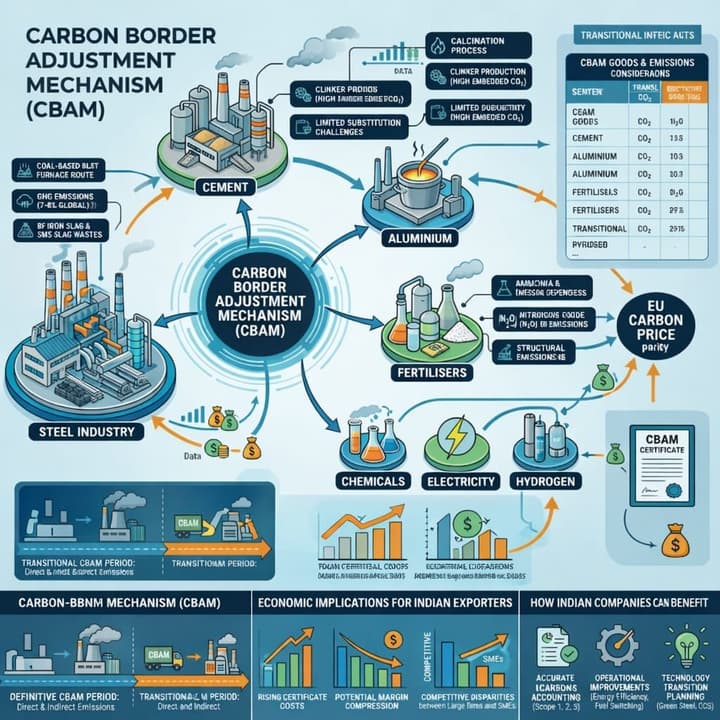
This trend is especially important for export-oriented manufacturers navigating international regulations such as the European Union’s Carbon Border Adjustment Mechanism (CBAM), which links carbon performance directly to trade competitiveness.
Organizations that fail to understand their emissions exposure may face:
- Rising compliance costs.
- Buyer pressure.
- Supply-chain exclusion.
- Margin compression.
- Reduced investor confidence.
Meanwhile, organizations that prepare early may unlock opportunities in:
- Energy savings.
- Renewable energy adoption.
- Green financing.
- Carbon market participation.
- ESG-driven procurement programs.
In this environment, carbon management is becoming closely tied to long-term industrial competitiveness.
Key Steps Organizations Should Take
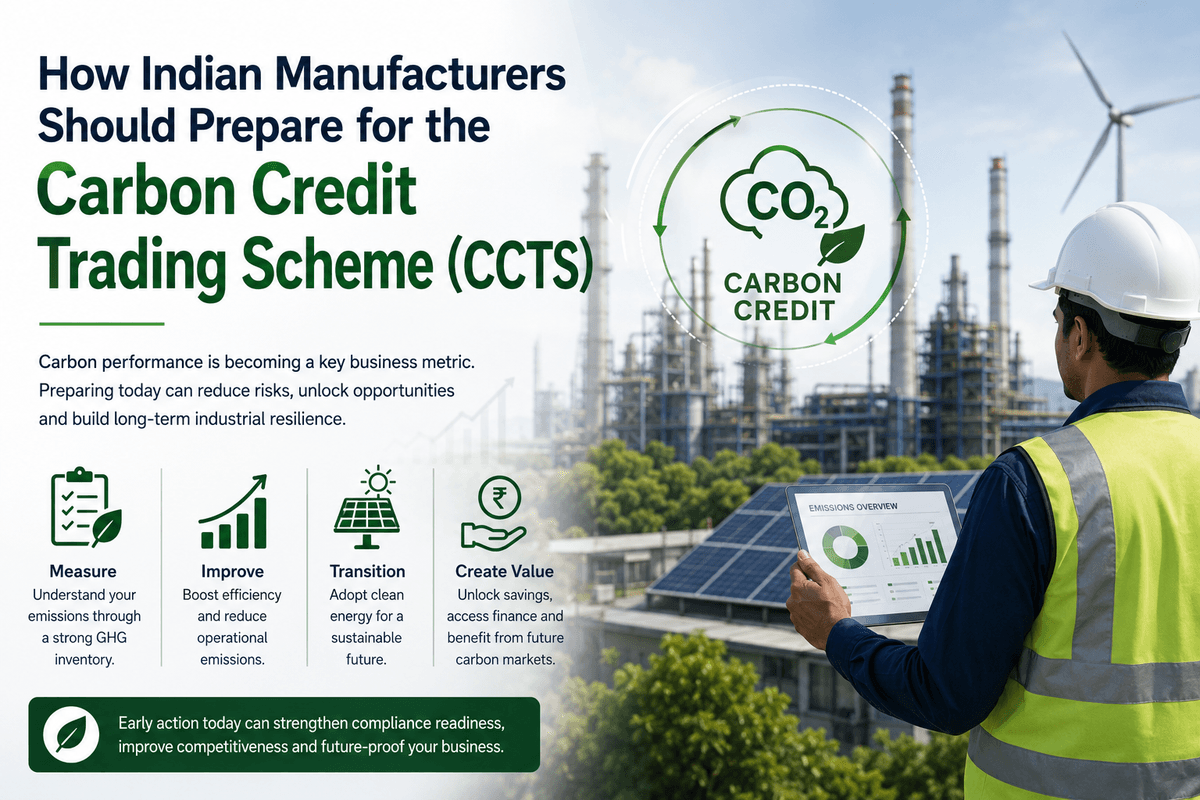
1. Conduct a GHG Inventory
The first step in preparing for the CCTS is understanding current emissions.
Organizations should conduct a comprehensive greenhouse gas (GHG) inventory covering:
- Scope 1 emissions (direct emissions).
- Scope 2 emissions (purchased electricity).
- Relevant Scope 3 emissions (supply chain, logistics, materials, etc.).
A robust emissions inventory helps organizations identify:
- Major emission sources.
- Operational inefficiencies.
- Energy-intensive processes.
- Decarbonisation opportunities.
Without reliable emissions data, organizations may struggle to evaluate compliance exposure or develop effective reduction strategies.
2. Establish an Emissions Baseline
A measurable emissions baseline is critical for tracking future performance.
Baseline assessments allow organizations to:
- Benchmark current emissions intensity.
- Measure future reductions.
- Assess carbon pricing exposure.
- Support ESG reporting.
- Prepare for future disclosure obligations.
Early baseline development may also support access to:
- Sustainability-linked financing.
- Investor reporting frameworks.
- ESG ratings improvements.
Organizations that establish strong internal carbon data systems today may gain strategic advantages as carbon reporting requirements evolve.
3. Assess Energy Consumption and Efficiency
For many industrial facilities, energy optimization represents one of the fastest and most cost-effective pathways toward emissions reduction.
Manufacturers should evaluate:
- Energy-intensive processes.
- Equipment efficiency.
- Power quality.
- Heat recovery opportunities.
- Operational inefficiencies.
Energy efficiency initiatives may generate immediate benefits through:
- Reduced electricity costs.
- Lower fuel consumption.
- Improved operational performance.
- Reduced carbon exposure.
In many cases, operational optimization creates both financial savings and sustainability improvements simultaneously.
4. Explore Renewable Energy Opportunities
Renewable energy is expected to play a major role in industrial decarbonisation strategies.
Organizations should evaluate options such as:
- Rooftop solar.
- Open access renewable power.
- Group captive models.
- Renewable Energy Certificates (IRECs).
- Energy storage integration.
Transitioning toward renewable energy may help organizations:
- Reduce Scope 2 emissions.
- Lower long-term energy price exposure.
- Improve ESG performance.
- Strengthen procurement competitiveness.
- Support carbon neutrality commitments.
As global buyers increasingly evaluate supplier emissions intensity, renewable energy adoption may become a strategic commercial advantage.
5. Build a Decarbonisation Roadmap
Preparing for the carbon transition requires a structured long-term strategy.
Organizations should identify:
- Low-cost emissions reduction opportunities.
- High-impact operational improvements.
- Technology transition pathways.
- Renewable integration opportunities.
- Carbon offset and market participation potential.
An effective decarbonisation roadmap should prioritize both:
- Short-term operational wins.
- Long-term transition planning.
This approach allows companies to reduce future compliance risks while strengthening resilience and competitiveness.
The Role of Carbon Markets
Carbon markets may eventually become a significant component of industrial strategy in India.
For organizations, carbon markets may create:
- Compliance obligations.
- Trading mechanisms.
- Monetization opportunities.
- Transition financing pathways.
Companies that reduce emissions efficiently may potentially benefit from:
- Carbon credit generation.
- Reduced compliance costs.
- Carbon asset development.
- Enhanced ESG positioning.
At the same time, organizations with higher emissions intensity may face increasing pressure to improve performance or participate in market mechanisms.
Understanding how carbon markets operate early may provide companies with strategic advantages as India’s climate economy evolves.
Preparing for a New Industrial Landscape
India’s Carbon Credit Trading Scheme is not simply another compliance framework. It represents a structural shift in how industrial competitiveness may be measured in the future.
As carbon performance becomes increasingly linked to finance, procurement, exports, and investor expectations, organizations that act early may position themselves more effectively for long-term growth.
Manufacturers that invest today in:
- Emissions measurement.
- Operational efficiency.
- Renewable energy.
- ESG systems.
- Decarbonisation planning.
may become more resilient, efficient, and globally competitive in the emerging low-carbon economy.
The transition toward carbon-conscious industry has already begun. The question for manufacturers is no longer whether carbon will matter — but how quickly organizations are prepared to adapt.